

QuIck Answer
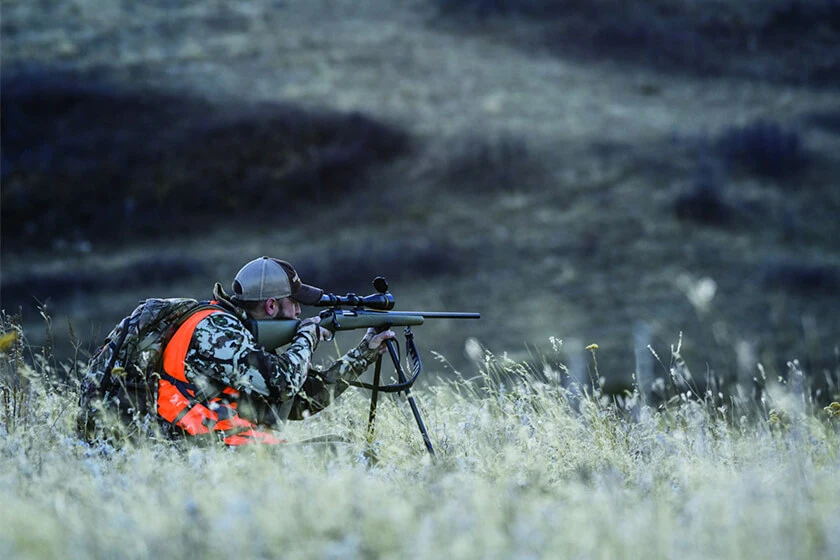
To learn how to shoot clay targets, point your front foot at the spot where you plan to break the clay, mount the shotgun so your dominant eye looks straight down the rib, and keep your eyes locked on the target instead of the barrel. Move the gun along the clay’s flight line, pull the trigger once the muzzle reaches the right lead, and keep swinging after the shot. Most beginners start on a trap field, where every target flies away from the 16-yard line.
Learning how to shoot clay targets comes down to four things: a repeatable stance, a consistent gun mount, reading the target’s line, and a swing that keeps moving after the trigger breaks. We cut AR500-class Hardox 500 steel targets in our own laser-cutting shop in Antalya, Turkey, and we see the same truth on clay fields and steel bays alike: shooters improve fastest when their fundamentals are boring and repeatable.
Below, we walk through it the way a range coach would on your first day, from eye dominance to follow-through, plus an equipment table, the five target presentations you’ll see most, a trap vs skeet vs sporting clays comparison, and the mistakes that cost new shooters the most birds.
If you also shoot handgun or rifle, our guides to metal targets for shooting practice and targets that work best for rifle shooting cover the steel side of a full range day.

What Is Clay Target Shooting? Definition and Purpose
Clay target shooting is a shotgun sport where you break small, saucer-shaped targets launched by a machine called a trap. A standard clay is about 4 1/4 in (108 mm) across, and the traditional version is molded from pitch and limestone so it shatters when only a few pellets connect. You call “Pull,” the target launches, and you have a second or two to read its line and break it.
The sport grew out of live-bird shooting, which is why the launcher is still called a trap. In the U.S., the ATA governs trap, the NSSA governs skeet, and the NSCA governs sporting clays. All three test one skill: hitting a moving target with a moving gun.
“We see customers learn steel and clays the same way. The shooters who progress fastest aren’t the ones with the most expensive gun. They’re the ones who mount it the same way every time and keep their eyes on the target, not the muzzle.”
— MBS Metal Target production team
That eyes-on-target habit carries over to handgun and rifle work, which is why reactive steel makes useful practice between clay sessions.
How to Shoot Clay Targets: Step-by-Step Technique
Every clean break follows the same sequence. Once it’s automatic, your attention goes where it belongs: on the target.
1. Find your dominant eye
Frame a distant object through a small triangle made with your hands, both eyes open, then bring your hands to your face. They’ll drift to your dominant eye. If it matches your shooting shoulder, shoot with both eyes open; if not, a dot of tape on your glasses over that eye usually fixes it.
2. Set your stance
Feet about shoulder width apart, weight slightly forward. Point your front toe at the break point, where you intend to hit the clay, so your hips rotate freely through the shot instead of winding up and locking.
3. Mount the gun the same way every time
Bring the stock to your cheek first, then into the shoulder pocket, so your head stays still and your dominant eye looks straight down the rib. Trap and American skeet allow a pre-mounted gun; sporting clays lets you start low-gun, which rewards a practiced mount even more.
4. Choose your hold point and visual pickup
The hold point is where the muzzle waits; the visual pickup is where your eyes wait, closer to the trap so you see the clay sharply before moving. On trap, a common hold is the house’s left corner from station 1 and the right corner from station
5. Read the line and apply lead
Your shot has to arrive where the clay is going. Lead depends on speed, angle, and distance: straightaways need very little, full crossers the most.
NOTE: THREE WAYS TO BUILD LEAD
- Swing-through: start behind, accelerate through, fire as you pass the front edge.
- Pull-away: lock onto the clay, then pull ahead to your lead and fire.
- Maintained lead: stay ahead of the clay, matching its speed.
6. Follow through
Keep the gun moving after the trigger breaks. Shot leaves the barrel as a string, and a gun that stops at the shot puts that string behind a crossing clay. You should see the break with the muzzle still moving.

Clay Shooting Equipment and Shotgun Setup
You don’t need custom gear for your first 25 clays, but you do need equipment that fits you and the range rules.
| Spec | Typical Value | Notes |
|---|---|---|
| Gauge | 12 gauge (most common); 20 gauge | Fit matters more than gauge. |
| Action | Over/under, semi-auto, or pump | Semi-autos soften recoil; an open O/U shows “empty” at a glance. |
| Choke | Trap: modified to full Skeet: skeet or cylinder Sporting: varies | Change chokes only when range rules allow (usually between stations). |
| Shot size | #7 1/2, #8, #8 1/2, #9 lead | ATA rules bar shot larger than #7 1/2. Many sporting courses post their own limits. |
| Payload | Up to 1 1/8 oz (32 g) in 12 gauge | ATA maximum. 1 oz (28 g) loads cut recoil noticeably over a long day. |
| Velocity limit | 1,290 fps (393 m/s) at 1 1/8 oz | ATA also allows 1,325 fps (404 m/s) at 1 oz and 1,350 fps (411 m/s) at 7/8 oz or less. |
| Target size | About 4 1/4 in (108 mm) standard | Sporting clays adds midi, mini, battue, and rabbit targets. |
| Shooting distance | Trap: 16 yd (15 m) Skeet: 21-yd (19 m) radius | Trap handicap yardage runs back to the 27-yard (25 m) line. |
| Protection | Impact-rated glasses + plugs or muffs | Required at virtually every club, for shooters and spectators. |
Pattern your shotgun on paper before you blame your swing
Plenty of “technique problems” are really a gun that shoots high or off to one side. Patterning means firing at a large paper sheet at a measured distance, on a range with a proper backstop, and checking where the dense center lands against your point of aim. The classic reference is a 30 in (76 cm) circle at 40 yards (37 m). Mount exactly as you do on the field and shoot several sheets; large paper shooting targets make the read easy.
Types of Clay Target Presentations
Disciplines change, but flight paths repeat. Recognize these five and you’ll know what move each clay asks for.
Crossers are where new shooters miss behind, because the clay covers the most ground side to side. Incomers look easy until they drop, and rabbits bounce, so a gun held above the line misses high.
Pistol shooters build the same eyes-first tracking habit; a rotating Texas Star target forces the same eyes-on-target habit with a handgun at proper steel distances.
Uses and Benefits of Clay Target Shooting
Hunting preparation
Sporting clays mimics field shooting, and the NSCA notes many hunters use it to stay sharp in the off-season. More reps before opening day mean cleaner, more ethical shots.
Competition
Registered events use classification systems, so newcomers compete against similar skill levels. Youth programs such as the Scholastic Clay Target Program (SCTP) and the USA Clay Target League field school teams nationwide.
Recreation and range operations
Sporting clays is often called “golf with a shotgun.” For gun range operators, a clay field draws a different crowd than pistol bays, and pairing it with a steel bay keeps members on site all day.
SAFETY WARNING
Every clay field has a shot fall zone that extends several hundred yards downrange. Never step forward of the shooting line, never load until you’re on station and it’s your turn, and keep your action open everywhere else. Shoot clays only on established ranges or on private land where state and county rules allow it and the full shot fall zone is under your control.
Common Clay Shooting Mistakes and How to Fix Them
Run through these five checks before you change chokes or buy a new gun.
MISTAKE 1: STOPPING THE GUN
- Red flag: you miss behind on crossers even when the lead looked right.
- Fix: pick a spot past the break point and keep swinging to it after every shot.
MISTAKE 2: LIFTING YOUR HEAD
- Red flag: misses land high, especially on going-away birds.
- Fix: keep your cheek on the comb until the pieces are falling.
MISTAKE 3: LOOKING AT THE BEAD
- Red flag: the swing slows down and you “aim” like a rifle.
- Fix: hard focus on the leading edge of the clay; let the muzzle stay in your peripheral vision.
MISTAKE 4: INCONSISTENT MOUNT
- Red flag: identical targets break one round and miss the next.
- Fix: practice dry mounts at home with a verified-empty shotgun, no ammunition in the room, pointed in a safe direction.
MISTAKE 5: IGNORING EYE DOMINANCE
- Red flag: you consistently miss to the same side on straightaways.
- Fix: retest your dominant eye and add a tape dot to your glasses if needed.
Trap vs Skeet vs Sporting Clays: Which Clay Game Fits You?
| Feature | Trap | Skeet | Sporting Clays |
|---|---|---|---|
| Layout | 5 stations, 16 yd (15 m) behind one trap house | 8 stations; high house (10 ft / 3 m) and low house (3 ft / 0.9 m) | 10 to 15 stations over natural terrain |
| Target direction | Going away at varying angles | Crossing, incoming, and outgoing | Any angle, speed, or target size |
| Typical round | 25 targets, 5 per station | 25 targets, singles and doubles | 50 to 100 targets per outing |
| Typical choke | Modified to full | Skeet or cylinder | Changes by station |
| Best for | First-timers, consistency | Learning crossing leads | Hunters, variety seekers |
On skeet, both houses’ targets cross about 15 ft (4.6 m) above ground just outside station 8. For a taste of sporting clays on a compact field, try 5-stand: five cages, multiple traps, and a menu card listing the targets.
Clay Shooting Checklist for Your First Range Day
| # | Item | What to Check |
|---|---|---|
| 1 | Eye protection | Impact-rated wraparound shooting glasses (ANSI Z87.1 marked) |
| 2 | Hearing protection | Plugs, muffs, or both for long days next to other shooters |
| 3 | Correct ammunition | Matches your gauge and the range’s shot size and payload limits; one gauge only in your bag |
| 4 | Shotgun and chokes | Cleaned, bore clear, chokes installed tight, choke wrench packed |
| 5 | Shell pouch and cap | Keeps rounds organized; a brim cuts glare |
| 6 | Range rules | Read posted rules, learn the cease-fire signal, ask for a walkthrough |
Clay Shooting Safety Rules and Range Etiquette
| Topic | Do | Don’t |
|---|---|---|
| Muzzle | Keep it downrange or straight up while on station | Sweep squadmates when turning to talk |
| Action | Keep it open and empty between stations | Walk anywhere with a closed, loaded gun |
| Loading | Load only on your turn; one shell for trap singles | Load while the shooter beside you is still up |
| Targets | Shoot only your own birds | Poach a squadmate’s target or a stray clay |
| Odd report | Stop, open the action, and check the bore after a weak “pop” | Fire again before confirming the barrel is clear |
| Ammunition | Carry one gauge only | Mix 20 and 12 gauge shells; a 20 can lodge in a 12 gauge barrel |
| Protection | Wear eye and ear pro the whole time on the field | Pull it off “just to watch” |
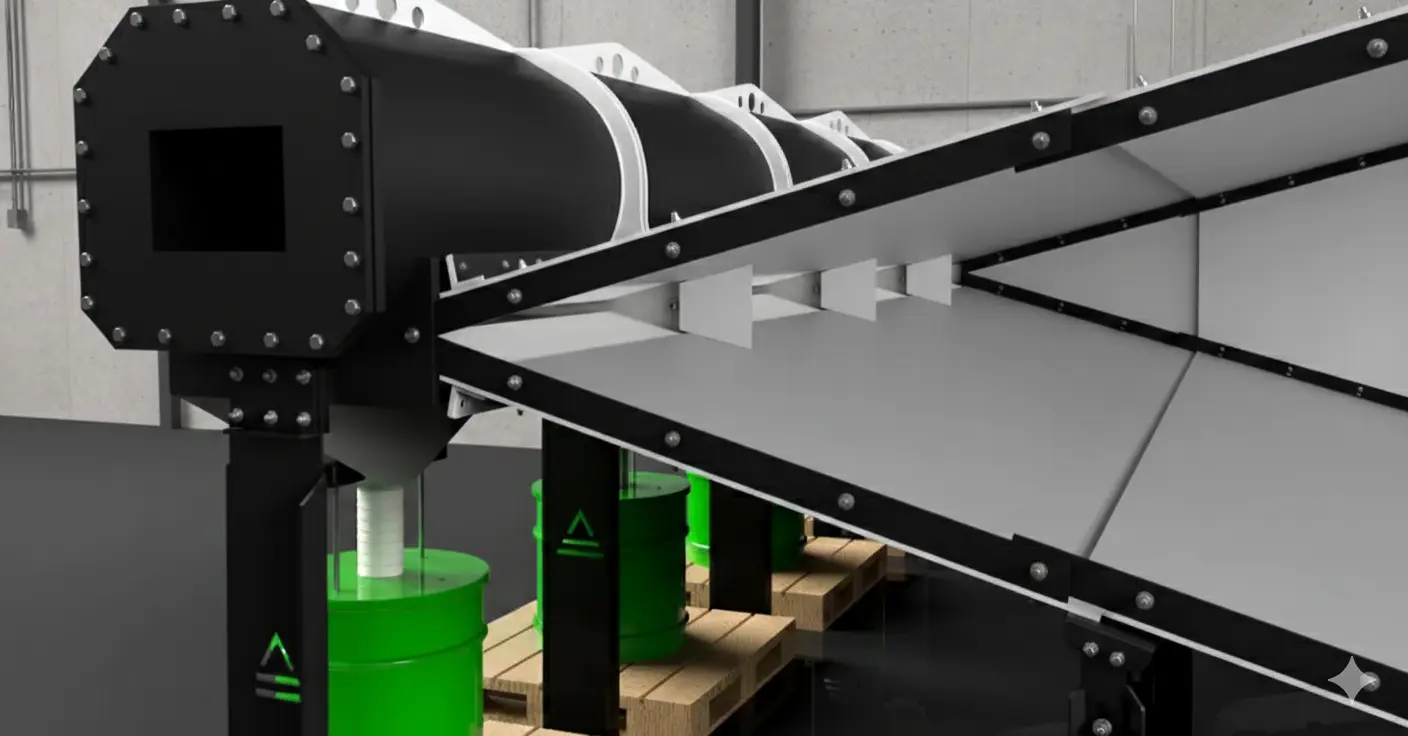
At ranges and training facilities, a dedicated firearm clearing station gives everyone one fixed, safe direction for loading and unloading checks.
NOTE: IF YOUR RANGE DAY INCLUDES HANDGUN OR RIFLE STEEL
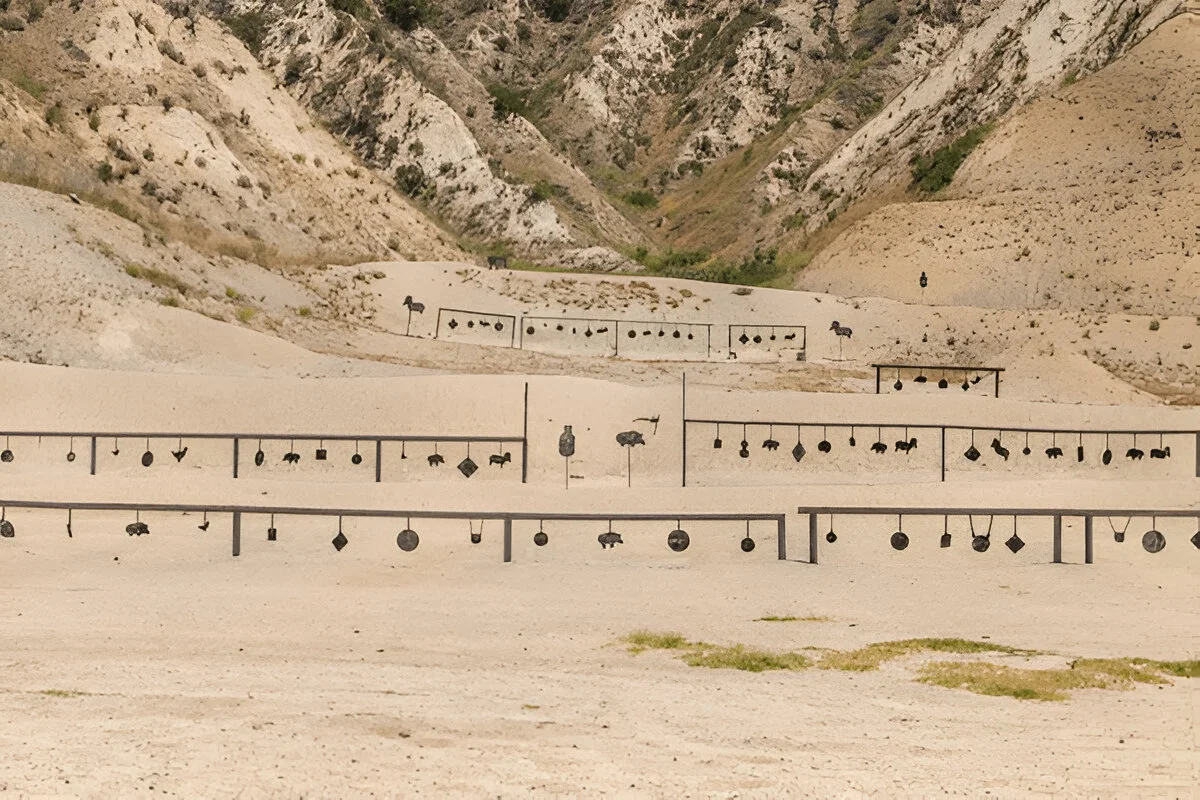
- Keep at least 10 yards (9 m) for handguns and 100 yards (91 m) for centerfire rifles on AR500-class steel.
- Never shoot AR500-class targets with rounds over 3,000 fps or with steel-core, armor-piercing, or green tip ammunition.
- Angle plates about 15 to 20° downward and set them in front of a dirt berm or natural backstop.
- Retire any plate that’s cratered or pitted; damaged faces send splash and ricochets in unpredictable directions.
- Eye and ear protection stay on for everyone. Steel cut from Hardox 500 plate (a wear-plate brand from Sweden’s SSAB) holds up well, but only within these limits. Pistol bays without a berm are better served by a bullet trap.
Frequently Asked Questions About Shooting Clay Targets
What is the easiest clay game for beginners?
Trap is usually the easiest place to start. Every target flies away from you, you shoot from 16 yards behind the trap house, and the presentation stays similar from shot to shot, so you can focus on mount and follow-through.
What gauge shotgun is best for clay shooting?
The 12 gauge is the most common choice for trap, skeet, and sporting clays. A 20 gauge works well for smaller or recoil-sensitive shooters. A gun that fits you matters more than the gauge.
What shot size is used for clay targets?
Clay loads typically use #7 1/2, #8, #8 1/2, or #9 lead shot. ATA trap rules allow no shot larger than #7 1/2 and a maximum payload of 1 1/8 oz in 12 gauge. Always check your range’s posted limits.
How far do you lead a clay target?
Lead depends on the target’s speed, angle, and distance. Straightaway targets need very little, while full crossing targets need the most. Swing-through, pull-away, and maintained lead are three ways to build it; keep the gun moving after the shot whichever you use.
Should I shoot clays with both eyes open?
Yes, if your dominant eye matches your shooting shoulder. Both eyes give you better depth perception and target speed reading. Cross-dominant shooters often place a small tape dot on their glasses over the dominant eye.
What choke should I use for trap and skeet?
Trap shooters typically use modified to full chokes because targets are breaking farther away. Skeet shooters use skeet or cylinder chokes for close crossing targets. Sporting clays chokes change with each station’s distances.
How many shells do I need for a round?
A round of trap or skeet is 25 targets, so one box per round plus a few spares. Sporting clays usually runs 50 to 100.
Can I practice clay shooting at home?
Only dry mount practice: verified-empty shotgun, no ammunition in the room, muzzle in a safe direction.
Can I shoot clay targets on my own land?
In many areas, yes, if state and county rules allow it and you control the full shot fall zone. Check local regulations first.
Featured Range Gear From Our Workshop
We don’t make shotguns or clay throwers. Our Antalya shop builds what supports the rest of your range day:
 Paper Shooting TargetsView product →
 Texas Star TargetView product →
 Heavy-Duty Firearm Clearing StationView product →
Need a custom steel layout beside your clay field? Talk to our team.